


Ethiopia - Hirut Birhanu - Natural Process
We roast and ship Monday - Friday.
Orders received before 9am typically ship same day.
Couldn't load pickup availability


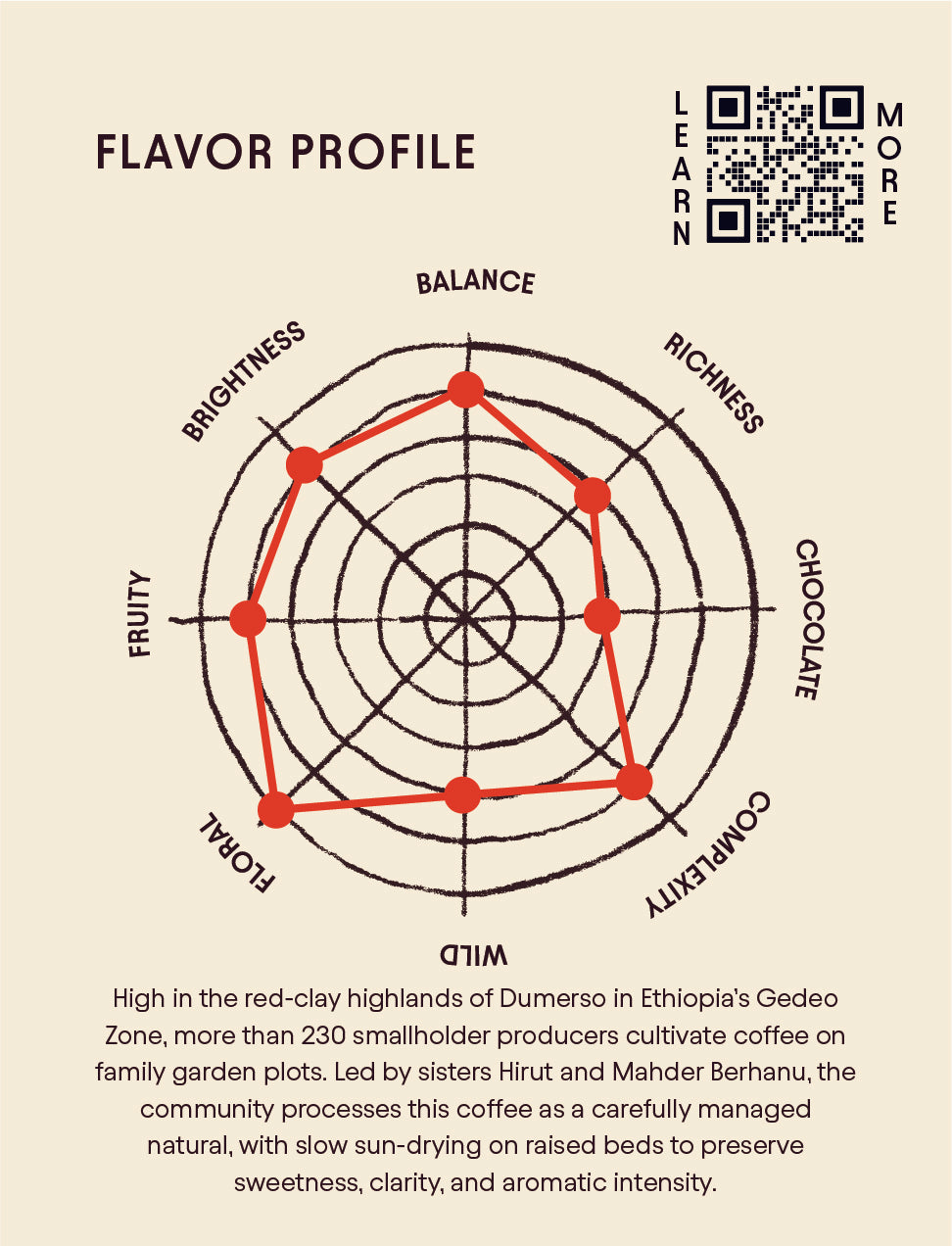
Technical Information
Producer: Various small-holder producers - Organized by Hirut Birhanu
Region: Dumerso, Yirgacheffe, Ethiopia
Harvest: Spring 2025
Varietal(s): Ethiopian Heirloom
Process: Natural Process
Altitude: 2100 masl
Importer: Swift Coffee
Agrton Gourmet Color: 105 (light)
Recommended Resting Time: 2-3 weeks

Coffee Story
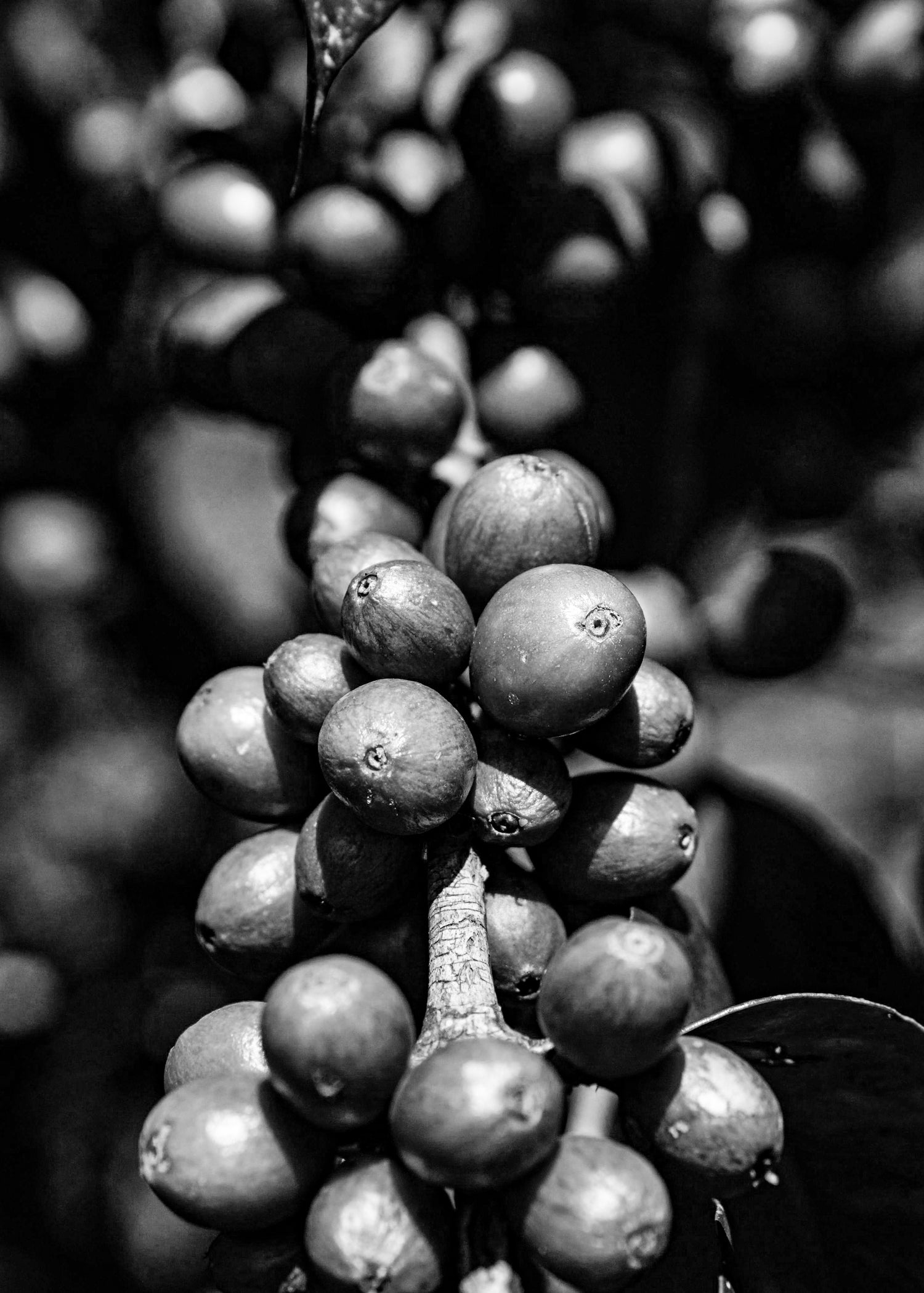
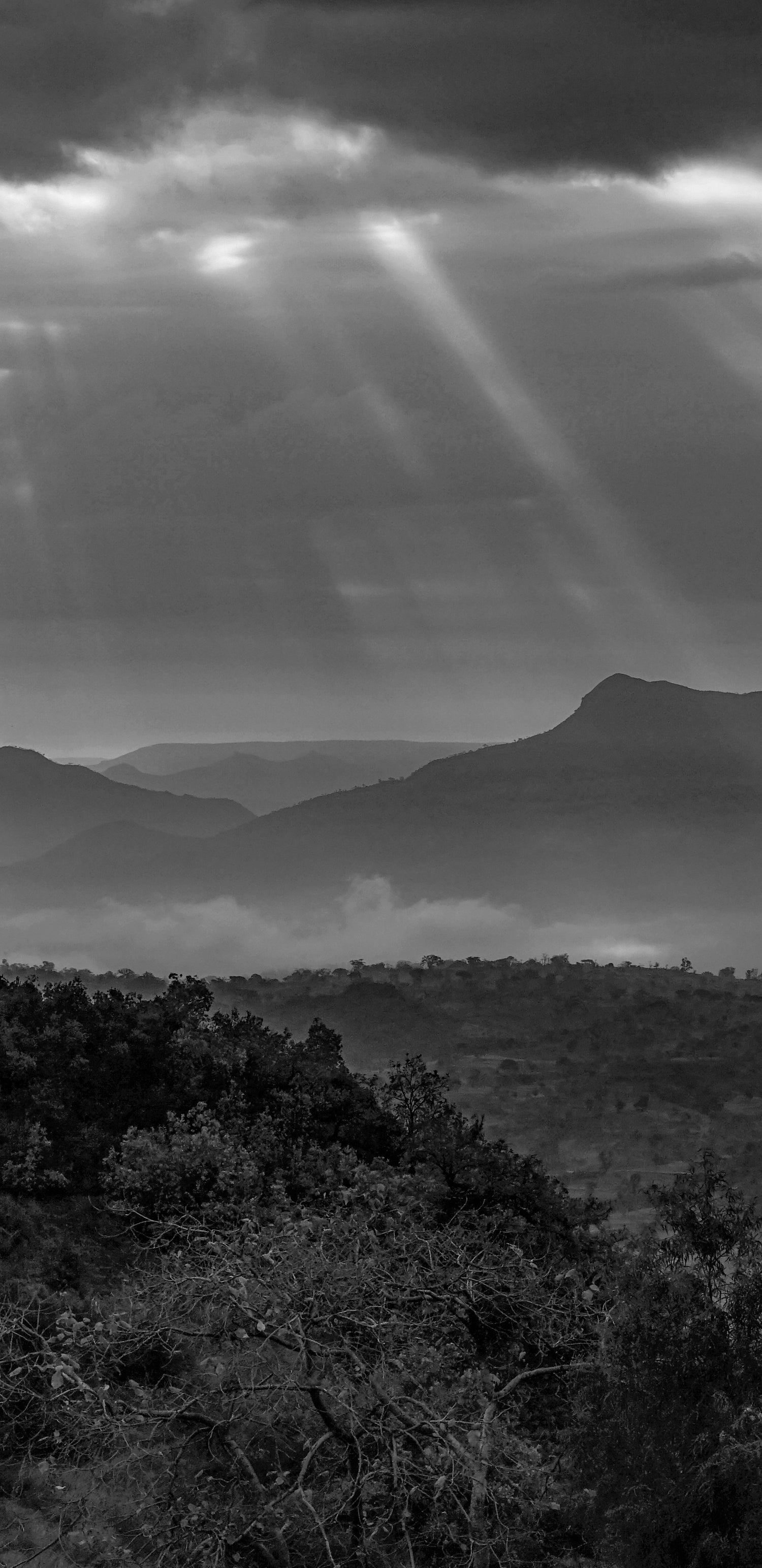
High in the red-clay highlands of southern Ethiopia’s Gedeo Zone, the Dumerso community sits between 1,900 and 2,200 meters above sea level in the heart of Yirgacheffe. Cool nights, warm days, and slow cherry maturation concentrate sugars and build the layered sweetness and structure for which the region is known. This coffee is cultivated by more than 232 smallholder producers across the kebele, including areas surrounding St. George’s Church and into the Chito village. Grown on small family compounds and interplanted with food crops and shade trees, these coffees reflect generations of agricultural knowledge and a deeply rooted coffee culture.
Since the 2019–2020 harvest, Hirut Berhanu and her sister Mahder have partnered with Swift Coffee Sourcing, one of our Ethiopian sourcing and exporting partners, through their vertically integrated washing station and export operation. In an origin often challenged by instability and broken contracts, Hirut and Mahder are recognized for consistency, transparency, and long-term commitment to their community. After rebuilding their facilities following damage during the 2017 unrest, they have continued to invest locally, completing a community clinic and school library with plans underway for an on-site daycare to support working mothers. Cherries are selectively hand-picked, density sorted, and carefully dried as naturals on raised beds over 14–17 days, with frequent turning and hand-sorting to ensure even drying and clarity in the cup. The result is a coffee that expresses Dumerso’s altitude, soil, and community through aromatic intensity, sweetness, and precision.
Collapsible content
Varietal
While Ethiopia has identified thousands of distinct coffee varieties—some estimates suggest over 10,000—they’re most commonly grouped under broad labels like Heirloom or Landrace. But these terms barely scratch the surface of what makes Ethiopian coffee so extraordinary.
Coffee is native to Ethiopia, and much of what’s grown here isn’t the result of breeding or lab-driven hybrids. Instead, these are naturally occurring Arabica varietals—wild strains that have evolved and cross-pollinated for centuries in their original environment. Grown by smallholder farmers across diverse microclimates, these coffees are the purest expression of place and plant. They offer a genetic and sensory diversity that’s unmatched anywhere else in the world.
In every cup, you're tasting a lineage that’s remained largely untouched—coffee as it has always been, shaped only by nature and time.
Processing
Coffee processing in Ethiopia is refreshingly simple—and intentionally so. When working with world-class varieties and exceptional terroir, the goal isn’t to alter the coffee, but to highlight what’s already there. A heavy hand would only get in the way.
It begins when ripe, vibrant cherries are hand-delivered to the washing station. They’re floated to remove any underripe or damaged fruit, ensuring that only the densest, highest-quality cherries move forward. Rather than being pulped, these cherries are spread in thin layers on raised African beds to dry whole, allowing the fruit to ferment naturally around the seed.
Over 18–22 days, the cherries are turned regularly by hand to promote even drying and prevent over-fermentation. During the midday heat or in the event of rain, they’re covered or moved to shade to protect the fruit. As they dry, the cherries darken from bright red to deep purple, developing layers of sweetness, fruit, and florals that define Ethiopia’s best naturals.
Every stage, from sorting to fermentation to drying, is deliberate, designed to preserve and amplify the coffee’s inherent character. The result is a fruit-forward, expressive cup with jammy sweetness, floral aromatics, and a clean, balanced finish.
Once fully dried, the coffee rests before being sent to the dry mill for final sorting, hulling, and export.
Terroir
Gedeo Zone, Yirgacheffe, Ethiopia is a high-elevation coffee growing region in southern Ethiopia, with production concentrated between 1,800 and 2,300 meters above sea level across densely cultivated, forested highlands. The area is defined by steep slopes, deep red clay and loam soils, consistent rainfall, and a cool, slow-ripening climate that supports long cherry maturation and high seed density.
Coffee is predominantly grown by smallholder producers in complex garden systems intercropped with enset, shade trees, and food crops, and processed through local washing stations or as small-scale naturals.
Coffees from Gedeo are known for their clarity and structure, typically showing high citric and malic acidity, pronounced florality, and layered citrus and stone fruit character with a clean, tea-like finish.